About this bottle
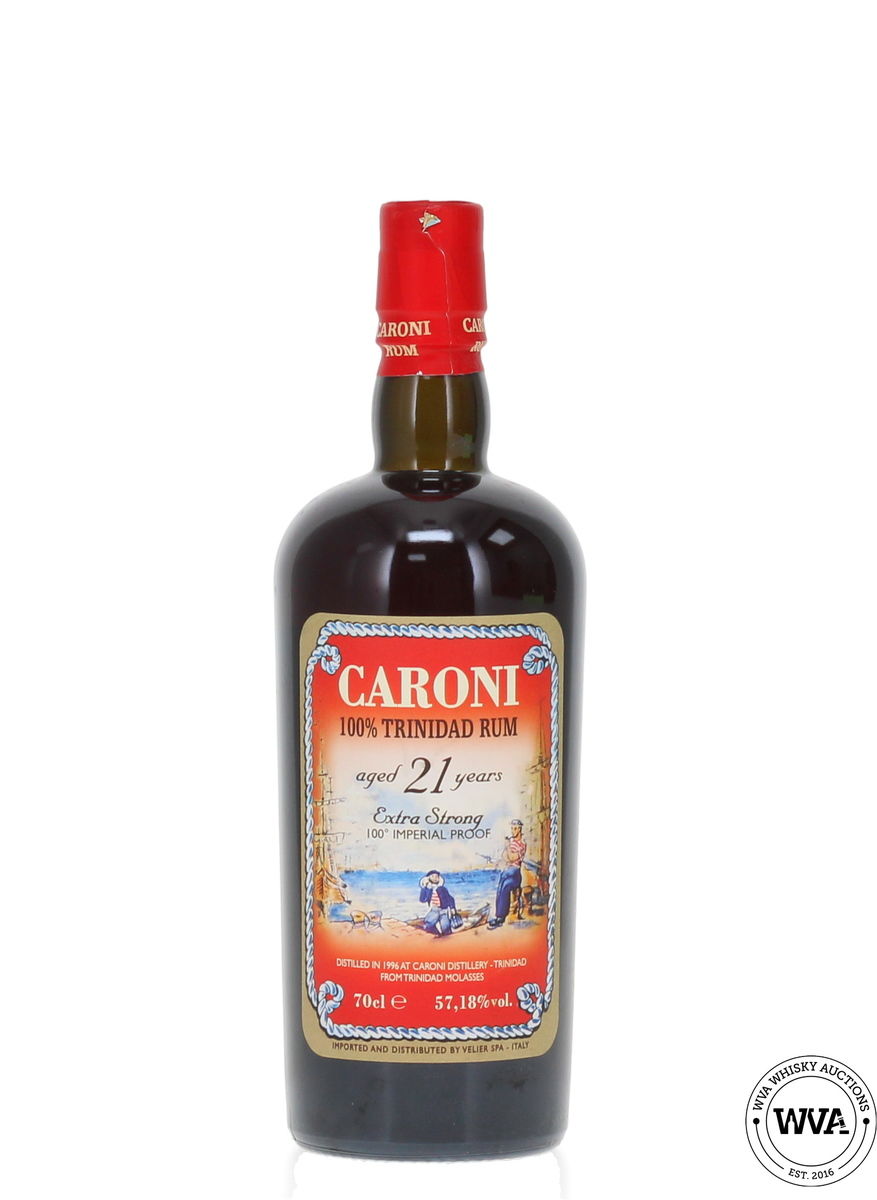
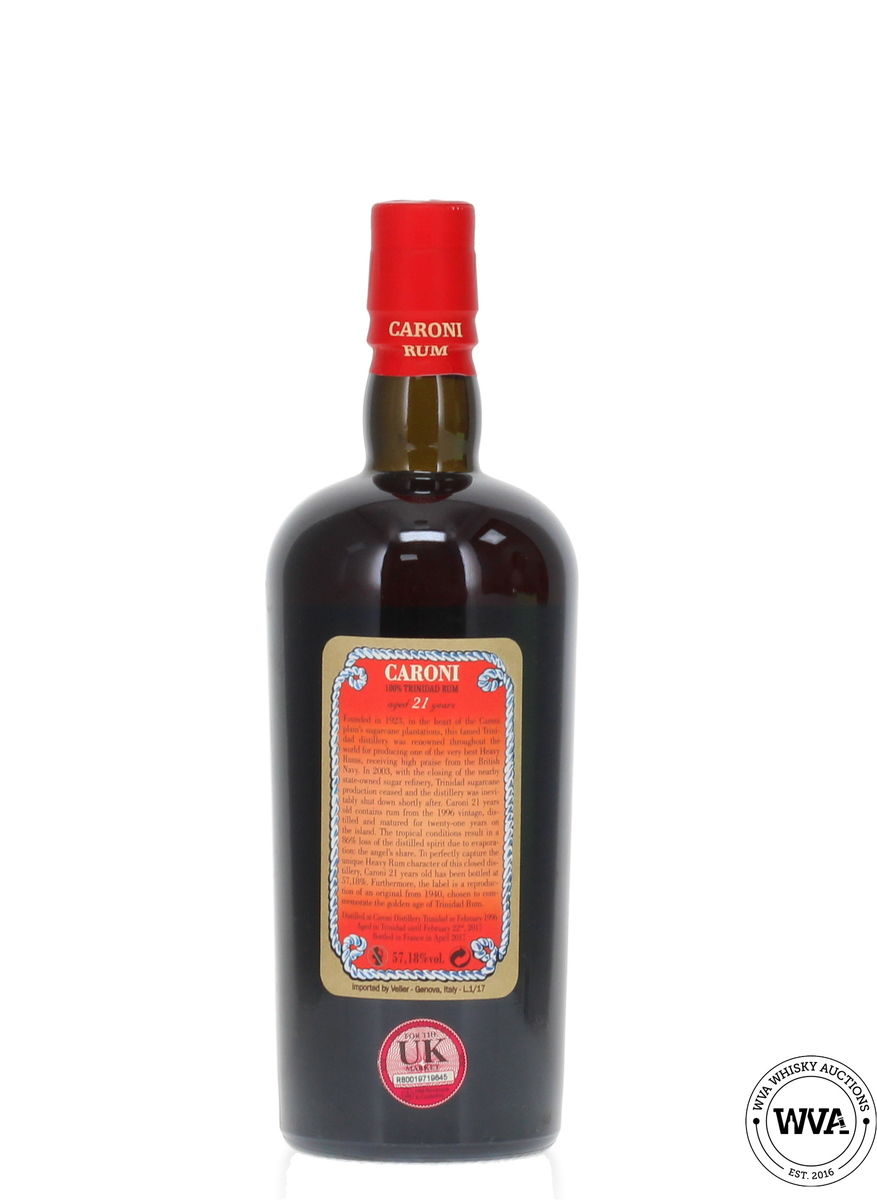
The Caroni 21 Year Old Extra Strong 100 Imperial Proof is a legendary, cult-status vintage rum distilled in 1996 and bottled in 2017 by the famed Italian independent bottler Velier. Because the state-owned Caroni Distillery in Trinidad closed its doors permanently in 2002, this expression is a highly sought-after collector's item representing the "lost" heavy style of Trinidadian rum.
Lot Conditions
Bottles in this auction are never classed as brand new. Boxes, bottles and packaging may carry marks or creases due to age. Please inspect the photographs closely before bidding, and contact us for an in-depth condition report: if a report is not requested, lots are sold as seen.
Given the age of the bottles and seals, the condition of the liquid is at the buyer’s discretion. Bottles can be insured against breakage or loss, not leakage.
- A 12.5% + VAT buyer’s premium is added to the hammer price.
- Payment is due within three days of the auction ending. After that, a further 5% + VAT of the hammer price is added.
- Bids are binding. By bidding you accept the terms and conditions.
Caroni 21 Year Old Extra Strong Imperial Proof
Winning Bid
[%% convertedBidValue | wvaTrimPence %%]
[%% convertedStartingPriceValue | wvaTrimPence %%]
([%% gbpBidValue %%]) ([%% gbpStartingPriceValue %%])
[%% bid_value | currency '£' | wvaTrimPence %%]
[%% starting_price | currency '£' | wvaTrimPence %%]
Ended 25th June 2026 · AUCTION #121 (JUNE 26) · 32 bids
Bid history
[% history.length %] [% history.length == 1 ? 'bid' : 'bids' %] on lot 1010399. Bidder numbers are anonymised.
| Bidder | Bid | When |
|---|---|---|
| [% bid.bidder %] | [%% formatCurrency(bid.bid) | wvaTrimPence %%] | [%% bid.created_at | wvaBidWhen %%] |
Specification
- Lot number
- 1010399
- Size
- 70cl
- Type
- Rum
- Age
- 21
- Number of Bottles
- 1
- Strength (%)
- 57.18%
- Distillery
- Caroni
- Distillery Status
- Silent
About the distillery
The Caroni distillery is said to have been established in 1918, however there are several historical references that suggest distilling was happening there earlier in the 20th century. It became part of the Tate & Lyle firm in 1936, who used it as a base for expanding their eventually considerable sugar operations in Trinidad.
Terms & conditions
Similar lots
Confirm your bid
[% lot.name %]
Lot [% lot.lot_id %]
Includes the 12.5% buyer's premium[%% vatApplicable ? ' and 20% VAT' : '' %%]. Shipping is not included. Bids are placed in pounds sterling. Bids are binding.